

How to Choose the Best Glass-Fused-to-Steel (GFS) Tank Supplier in China: Quality Standards & Custom Wholesale Benefits
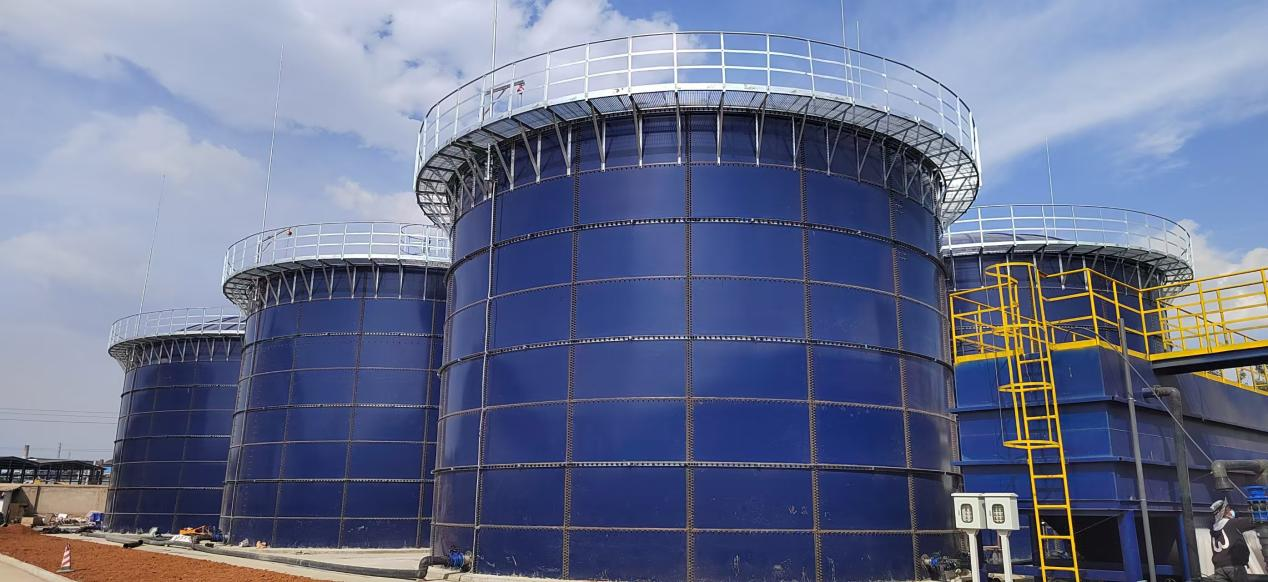
China high-quality GFS Tank Supplier
Executive Summary
Abstract: Industrial purchasers seeking reliable containment solutions often face structural degradation challenges from aggressive media. This technical analysis evaluates material standards and engineering specifications for selecting a China high-quality GFS Tank Supplier to optimize lifecycle value. Implementing factory-applied inorganic glaze systems eliminates traditional on-site coating failures, providing a zero-downtime containment infrastructure for municipal, industrial, and agricultural sectors worldwide.
Technical Challenges in Industrial Liquid and Dry Bulk Containment
Industrial containment infrastructures operate under severe chemical, mechanical, and environmental stress. Traditional concrete assets routinely develop micro-cracks from thermal expansion and structural settling, leading to localized seepage and internal rebar corrosion. Similarly, field-welded carbon steel alternatives remain susceptible to atmospheric oxidation and localized galvanic corrosion if field-applied coatings suffer from non-uniform thickness, pinholes, or structural flexing.
For procurement managers overseeing wastewater treatment facilities, chemical processing installations, or anaerobic digestion infrastructure, standard configurations present clear vulnerabilities:
Chemical Aggression: High-concentration organic wastewater, municipal sludge, and anaerobic digestate exert severe acid and alkali stresses, compromising low-tier polymer linings.
Mechanical Wear: In dry bulk storage or slurry applications, granular abrasives scratch internal coatings, exposing bare substrate to rapid oxidation.
Operational Downtime: Traditional assets require cyclical recoating, sandblasting, and intensive maintenance routines, halting revenue-generating processes.
To mitigate these physical risks, engineering teams transition toward modular bolted enamel systems engineered by a specialized Top China GFS Tank Manufacturer. These systems utilize a molecular bond created by fusing a specialized silica-based glass enamel to a high-strength base steel substrate at temperatures ranging from 800°C to 820°C. The resulting material structure combines the tensile elasticity of steel with the chemical inertia of glass.
Evaluating Material Quality Standards and Core Substrates
+-------------------------------------------------------------------------+
| Inorganic Glass Enamel Layer |
| (Acid/Alkali Resistant, Hard, Ultra-Smooth Surface, Sintered at 820°C) |
+-------------------------------------------------------------------------+
| Interfacial Bonding Layer |
| (Molecular Fusion of Titanium-Rich Carbon Steel & Glass) |
+-------------------------------------------------------------------------+
| High-Strength TRS Base Steel Substrate |
| (Low-Carbon Steel, Engineered for High Thermal Stress) |
+-------------------------------------------------------------------------+
The underlying mechanical performance of a glass-fused-to-steel module depends on metallurgical composition. Standard hot-rolled steel sheets exhibit fish-scaling and gas bubbling during high-temperature enamel firing due to hydrogen release. High-tier China GFS Tank Wholesale Factories utilize specialized low-carbon, titanium-rich steel (TRS) substrates specifically optimized for thermal processing.
Substrate Metallurgy
Titanium stabilization fixes carbon and nitrogen atoms within the steel lattice, preventing lattice distortion during the 800°C thermal cycle. The mechanical properties—including yield strength, tensile limits, and total elongation percentage—remain stable post-firing, allowing individual panels to withstand high hydrostatic loads without structural shifting.
Glaze Formulation and Inertia
The enamel layer must feature a balanced chemical formulation to maintain structural stability across a broad pH spectrum. High-tier glaze matrices incorporate precise percentages of silica, borax, and cobalt/nickel oxides to achieve chemical inertia against aggressive biosolids and industrial effluents. The inner enamel layer exhibits an ultra-smooth profile, reducing material adhesion and friction coefficients in sludge and slurry handling applications.
Operational Scenarios: Adapting to Severe Environments
Modular bolted storage configurations deliver reliable performance across diverse, demanding operating conditions:
Municipal Wastewater and Anaerobic Digestion Infrastructure
In modern urban wastewater facilities, GFS configurations function as industrial anaerobic digesters, sludge holding units, and sedimentation structures. In an anaerobic ecosystem, the headspace accumulates hydrogen sulfide ($H_2S$) and volatile organic compounds. When combined with moisture, these compounds generate highly corrosive sulfuric acid environments. While traditional concrete suffers from rapid biogenic sulfuric acid degradation, the glass layer resists chemical breakdown, maintaining structural sealing integrity over extended operational periods.
Industrial Slurry and Dry Bulk Cargo Management
Industrial mineral processing and agricultural storage demand containment systems that withstand both chemical exposure and continuous abrasion. When storing abrasive sand, gravel, or thick slurry mixtures, traditional protective coatings experience rapid wear. The high surface hardness of factory-fired enamel preserves substrate integrity against continuous particle impact, while the dense glass surface blocks moisture penetration, preventing material caking along internal walls.
Engineering Benefits of Modular Bolted Architecture
Transitioning from field-welded containment to modular factory-prefabricated structures significantly alters project installation schedules and long-term asset management.
Accelerated Construction Timeline
Field-welded tanks require extensive on-site preparation, including certified welding labor, radiography testing, and multi-layer coating applications that are highly sensitive to ambient humidity and wind. In contrast, Glass-Fused-to-Steel (GFS) panels are manufactured, enameled, and quality-tested within controlled factory environments. GFS tanks rely on high-strength self-locking bolts and specialized elastomeric gaskets when installing on-site, enabling fast assembly even in remote or constrained sites without heavy lifting equipment.
Scalability and Structural Versatility
Industrial operations often require fluid capacity adjustments as production volumes shift. The GFS bolted tanks design allows engineering teams to dismantle, expand, or relocate structures by incorporating additional panel rings, lowering overall capital expenditure compared to permanent concrete alternatives.
Procurement Framework for B2B Sourcing
When sourcing containment infrastructure from international manufacturers, technical auditors should implement a standardized evaluation framework to verify product quality and consistency:
Factory Automation and Capacity: Verify that the supplier operates automated processing environments with substantial manufacturing capacities (e.g., modern facilities capable of producing up to 80,000 enameled plates annually) to ensure uniform coating thickness and dependable production schedules.
Quality Testing Documentation: Demand systematic testing records, including high-voltage holiday detection tests (900V to 1500V) to confirm the complete absence of micro-pores or pinholes across every single module surface.
Global Project Verification: Review the manufacturer’s documentation for successful international deployments across diverse climate conditions, ensuring compliance with global manufacturing and engineering codes.
Technical Specifications and Comparative Matrix
The following matrix compares primary industrial containment technologies across key engineering parameters:
Engineering Performance Metric Factory-Applied Glass-Fused-to-Steel (GFS) Field-Welded Carbon Steel (Epoxy-Coated) Reinforced Cast-in-Place Concrete
Primary Corrosion Resistance Exceptionally High (Inorganic Inert Glass Coating) Moderate (Dependent on Field Coating Uniformity) Low (Susceptible to Acidic & Biogenic Attacks)
On-Site Installation Period Short (Modular Bolted Mechanical Assembly) Long (Extensive On-Site Welding & Curing) Maximum (Structural Shuttering & Concrete Curing)
Susceptibility to Micro-Cracking None (High-Elasticity Steel Base Module) Moderate (Prone to Weld-Line Stress Fractures) High (Susceptible to Thermal & Settling Cracks)
Asset Lifecycle Maintenance Minimal (Periodic Visual Inspections Only) High (Cyclical Sandblasting & Recoating Required) High (Structural Patching & Waterproofing Needed)
Structural Adaptability Flexible (System Can Be Expanded or Relocated) Rigid (Permanent Welded Structure) Non-Adaptable (Monolithic Permanent Asset)
Technical Frequently Asked Questions
How do modern engineering standards prevent structural damage at panel joint connections?
Every individual panel module undergoes precision CNC punching and edge-rounding prior to thermal processing. High-strength self-locking bolts, coupled with synthetic EPDM or specialized polymer sealants, distribute mechanical stresses evenly across the joint assembly. This design prevents point loading and structural shifting during fluid movement or seismic activity, maintaining long-term sealing integrity.
What parameters should a global engineering firm evaluate when auditing a China high-quality GFS Tank Supplier?
Auditing teams should focus on substrate verification, testing protocols, and production capacity. A qualified supplier must utilize dedicated titanium-rich steel sheets and perform 100% high-voltage holiday testing to ensure defect-free enamel coatings. Furthermore, the supplier's manufacturing capacity should support large-scale industrial requirements while adhering to international environmental and structural standards.
How do environmental temperatures affect the structural integrity of modular bolted enamel structures?
The thermal expansion coefficient of specialized titanium-rich base steel closely matches that of the engineered glass glaze layer. This thermodynamic alignment ensures that the composite material expands and contracts uniformly under extreme temperature variations (-40°C to 60°C), preventing delamination, cracking, or structural bond failure in demanding climates.
What logistical benefits do B2B buyers gain when procuring from China GFS Tank Wholesale Factories?
Because modular panels ship un-assembled, they pack flat into standard shipping containers, significantly lowering international freight costs compared to pre-fabricated or large-scale welded components. On-site assembly requires minimal heavy equipment, enabling cost-effective deployment in remote regions or compact urban environments with restricted logistical access.
For further technical specifications, structural engineering details, and global deployment documentation, view the comprehensive product and engineering portfolio at LIDA Industrial Containment Solutions.
Chengdu LIDA Technology Co., Ltd.
Chengdu LIDA Technology Co., Ltd.
+86 15069984033
info@lida-tech.cn
Legal Disclaimer:
EIN Presswire provides this news content "as is" without warranty of any kind. We do not accept any responsibility or liability for the accuracy, content, images, videos, licenses, completeness, legality, or reliability of the information contained in this article. If you have any complaints or copyright issues related to this article, kindly contact the author above.
