

The top news stories from China
Provided by AGP
Sanitary Napkin Manufacturing Plant Setup, Feasibility Study, ROI Analysis and Business Plan Consultant
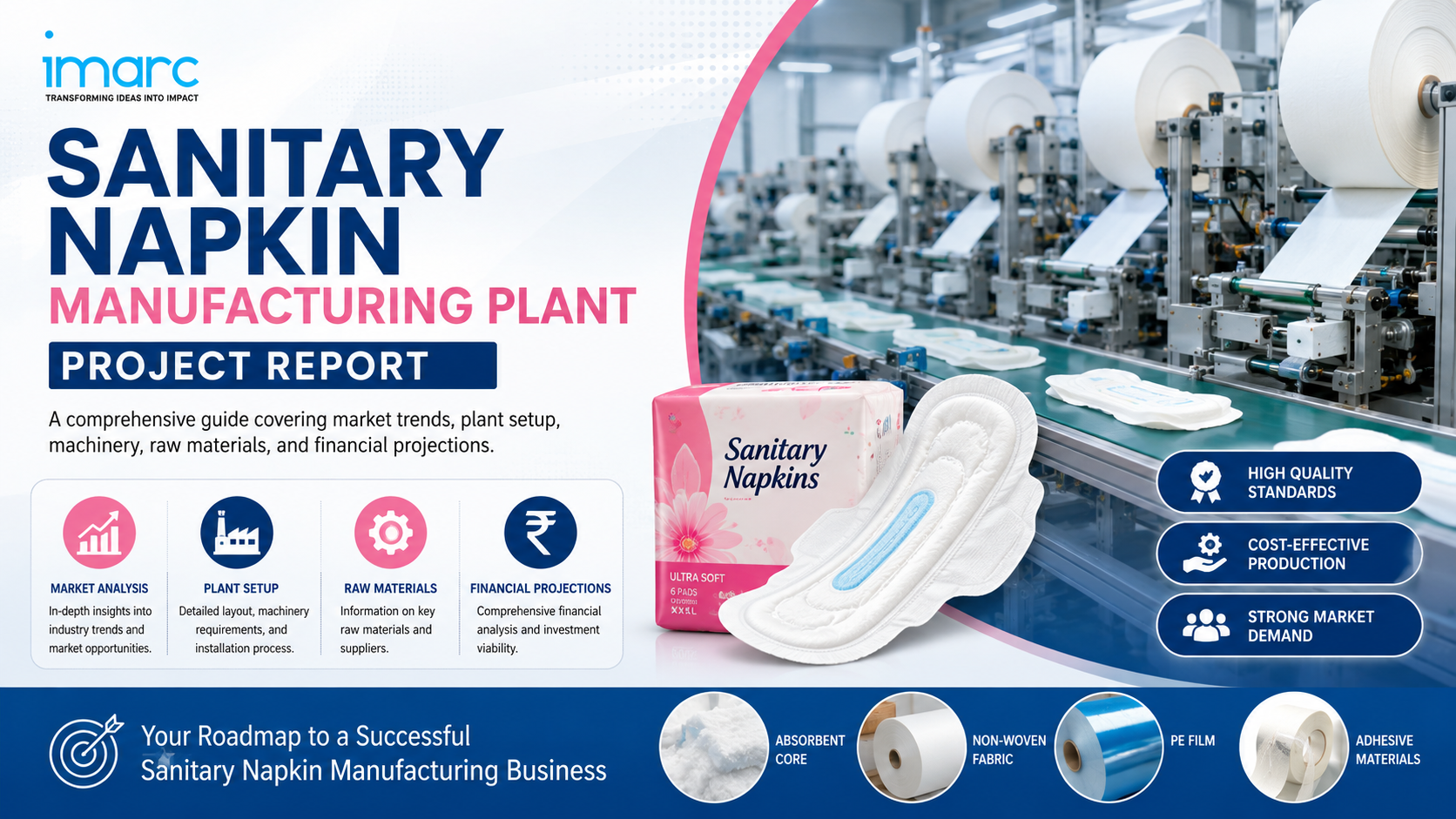
A Detailed DPR Covering CapEx, OpEx, Process Design, ROI Analysis, and the Growing Global Opportunity in Menstrual Hygiene Product Manufacturing
BROOKLYN, NY, UNITED STATES, May 19, 2026 /EINPresswire.com/ -- Setting up a sanitary napkin manufacturing plant is one of the most defensible consumer goods manufacturing investments available today. Demand is non-cyclical — menstrual hygiene is a biological constant, not a discretionary purchase. Rising female literacy, government-led menstrual hygiene programmes, urbanisation, and rapid e-commerce penetration into rural markets are all simultaneously expanding the consumer base. Meanwhile, penetration levels in emerging economies remain well below potential, meaning the growth runway is structural and long-dated rather than near-term and saturating.IMARC Group’s Sanitary Napkin Manufacturing Plant Project Report is a complete DPR and sanitary napkin manufacturing feasibility study for investors, consumer goods manufacturers, and project developers entering this space. It covers the full sanitary pad manufacturing plant setup — from wood pulp preparation through core formation, nonwoven wrapping, adhesive application, and packaging — with complete sanitary napkin plant CapEx and OpEx modelling and 10-year financial projections.
𝐑𝐞𝐪𝐮𝐞𝐬𝐭 𝐟𝐨𝐫 𝐚 𝐒𝐚𝐦𝐩𝐥𝐞 𝐑𝐞𝐩𝐨𝐫𝐭: https://www.imarcgroup.com/sanitary-napkin-manufacturing-plant-project-report/requestsample
𝐈𝐧𝐯𝐞𝐬𝐭𝐦𝐞𝐧𝐭 𝐃𝐫𝐢𝐯𝐞𝐫𝐬 𝐚𝐧𝐝 𝐌𝐚𝐫𝐤𝐞𝐭 𝐎𝐩𝐩𝐨𝐫𝐭𝐮𝐧𝐢𝐭𝐲
Three forces are creating the current investment window for sanitary napkin manufacturing:
𝐍𝐨𝐧-𝐜𝐲𝐜𝐥𝐢𝐜𝐚𝐥 𝐝𝐞𝐦𝐚𝐧𝐝 𝐰𝐢𝐭𝐡 𝐬𝐭𝐫𝐮𝐜𝐭𝐮𝐫𝐚𝐥 𝐠𝐫𝐨𝐰𝐭𝐡: Sanitary napkins are essential daily-use healthcare products. Demand does not contract in economic downturns. What it does do is grow: as female literacy rises, as women enter the workforce, and as rural healthcare infrastructure improves, adoption rates climb. India’s National Family Health Survey data shows that the percentage of women aged 15–24 using hygienic menstrual products rose from 57.6% to 77.3% between NFHS-4 and NFHS-5. That 20-percentage-point shift represents tens of millions of new consumers entering the market — and it is still moving.
𝐆𝐨𝐯𝐞𝐫𝐧𝐦𝐞𝐧𝐭 𝐩𝐫𝐨𝐠𝐫𝐚𝐦𝐦𝐞𝐬 𝐜𝐫𝐞𝐚𝐭𝐢𝐧𝐠 𝐢𝐧𝐬𝐭𝐢𝐭𝐮𝐭𝐢𝐨𝐧𝐚𝐥 𝐝𝐞𝐦𝐚𝐧𝐝: India’s National Menstrual Hygiene Scheme distributes affordable sanitary napkins to adolescent girls in rural areas through school and health centre networks. The Swachh Bharat Abhiyan promotes biodegradable hygiene solutions. State-level schemes in Rajasthan, Tamil Nadu, Maharashtra, and Uttar Pradesh add further institutional procurement. A domestic sanitary napkin manufacturing unit that meets government quality standards gains access to a captive, recurring institutional buyer base that supplements retail sales.
𝐁𝐢𝐨𝐝𝐞𝐠𝐫𝐚𝐝𝐚𝐛𝐥𝐞 𝐚𝐧𝐝 𝐨𝐫𝐠𝐚𝐧𝐢𝐜 𝐬𝐞𝐠𝐦𝐞𝐧𝐭 𝐨𝐩𝐞𝐧𝐢𝐧𝐠 𝐚 𝐩𝐫𝐞𝐦𝐢𝐮𝐦 𝐭𝐢𝐞𝐫: Consumer preference is shifting toward eco-friendly alternatives. In January 2025, CSIR-IICT partnered with Aakar Innovations to launch WOW technology, converting banana pseudostems into pulp for compostable sanitary pads. Amrutanjan Health Care Limited approved a new manufacturing plant investment of INR 123 crore in May 2024 to address domestic and export demand. The biodegradable sanitary pad manufacturing segment commands a 30–50% price premium over conventional products, improving margins for manufacturers who invest in the capability.
𝐏𝐫𝐨𝐝𝐮𝐜𝐭 𝐑𝐚𝐧𝐠𝐞 𝐚𝐧𝐝 𝐏𝐫𝐨𝐝𝐮𝐜𝐭 𝐓𝐲𝐩𝐞𝐬
A sanitary napkin manufacturing plant’s product range determines its addressable markets and margin profile:
• Regular sanitary napkins (economy): The highest-volume segment. Standard absorbency, basic nonwoven cover, competitive pricing. Serves the mass market in urban and semi-urban areas and institutional procurement channels.
• Ultra-thin napkins: Reduced core thickness with higher-grade SAP for equivalent absorbency at lower bulk. Premium urban retail segment. Higher per-unit realisation with modest additional raw material cost.
• Overnight and heavy flow napkins: Extended length with higher SAP loading for overnight protection. Growing segment as consumer awareness of product variety expands.
• Panty liners: Lighter, thinner format for daily freshness use. High frequency of use per consumer creates strong volume potential. Entry point for premium personal care brands.
• Biodegradable and organic sanitary pads: Natural fibre cores (bamboo, banana pulp, organic cotton), plastic-free packaging, compostable materials. The organic sanitary pad manufacturing plant segment serves the premium, environmentally-conscious consumer and export markets.
• Maternity pads: Post-partum use, larger format with high absorbency. Hospital and retail distribution. Lower volume but stable institutional demand from maternity wards and pharmacies.
𝐀𝐜𝐜𝐞𝐬𝐬 𝐭𝐡𝐞 𝐅𝐮𝐥𝐥 𝐒𝐚𝐧𝐢𝐭𝐚𝐫𝐲 𝐍𝐚𝐩𝐤𝐢𝐧 𝐌𝐚𝐧𝐮𝐟𝐚𝐜𝐭𝐮𝐫𝐢𝐧𝐠 𝐏𝐥𝐚𝐧𝐭 𝐅𝐞𝐚𝐬𝐢𝐛𝐢𝐥𝐢𝐭𝐲 𝐑𝐞𝐩𝐨𝐫𝐭: https://www.imarcgroup.com/sanitary-napkin-manufacturing-plant-project-report
𝐇𝐨𝐰 𝐚 𝐒𝐚𝐧𝐢𝐭𝐚𝐫𝐲 𝐍𝐚𝐩𝐤𝐢𝐧 𝐌𝐚𝐧𝐮𝐟𝐚𝐜𝐭𝐮𝐫𝐢𝐧𝐠 𝐏𝐥𝐚𝐧𝐭 𝐖𝐨𝐫𝐤𝐬 — 𝐓𝐡𝐞 𝐏𝐫𝐨𝐝𝐮𝐜𝐭𝐢𝐨𝐧 𝐏𝐫𝐨𝐜𝐞𝐬𝐬
Sanitary napkin production is a precision hygiene manufacturing process. All stages require strict cleanliness controls, and finished products undergo sterilisation before packaging:
• Wood pulp fluffing: Compressed wood pulp sheets are fed into a pulveriser or fluff pulp mill. The pulveriser breaks the pulp into a fine, fluffy fibre mass that forms the absorbent core. Pulp quality — fibre length, moisture content, and purity — directly determines core absorbency
• SAP (Super Absorbent Polymer) blending: SAP granules are distributed into the fluffed pulp core at controlled ratios. SAP absorbs and locks liquid many times its own weight. SAP content determines the absorbency rating and is the key differentiator between economy and premium sanitary pad production plant output
• Core forming: The SAP-pulp blend is air-laid onto a forming drum to create the shaped absorbent core. Core weight, dimensions, and density are controlled to specification. Core forming is the highest-precision step in the process
• Acquisition and distribution layer (ADL): A secondary nonwoven layer is placed between the topsheet and core to rapidly distribute liquid across the core surface, preventing localised saturation. Present in premium and ultra-thin products
• Topsheet and backsheet application: Nonwoven fabric (topsheet) is laminated onto the core top surface for skin contact. A leak-proof polyethylene backsheet is laminated to the bottom. Topsheet softness and breathability are key consumer quality attributes
• Wing formation and adhesive application: Adhesive strips are applied to the backsheet for garment attachment. Wings (side flaps) are folded and bonded. Adhesive coverage and release-liner application are quality-critical steps
• Individual wrapping and sterilisation: Each napkin is wrapped in individual film packaging. Finished packs pass through UV sterilisation to ensure hygiene and safety compliance. UV treatment is the final hygiene assurance step
• Pack counting and boxing: Individual packs are counted, grouped into retail pack sizes, boxed, and palletised for dispatch. Pack count accuracy is a customer quality requirement
𝐏𝐥𝐚𝐧𝐭 𝐈𝐧𝐯𝐞𝐬𝐭𝐦𝐞𝐧𝐭 𝐄𝐜𝐨𝐧𝐨𝐦𝐢𝐜𝐬
𝐏𝐫𝐨𝐝𝐮𝐜𝐭𝐢𝐨𝐧 𝐂𝐚𝐩𝐚𝐜𝐢𝐭𝐲:
• Annual production capacity ranging between 100–300 million pieces, enabling economies of scale while maintaining operational flexibility
𝐏𝐫𝐨𝐟𝐢𝐭𝐚𝐛𝐢𝐥𝐢𝐭𝐲 𝐁𝐞𝐧𝐜𝐡𝐦𝐚𝐫𝐤𝐬:
• Gross Profit: 45–55%
• Net Profit: 20–25% after financing costs, depreciation, and taxes
𝐎𝐩𝐞𝐫𝐚𝐭𝐢𝐧𝐠 𝐂𝐨𝐬𝐭 (𝐎𝐩𝐄𝐱) 𝐁𝐫𝐞𝐚𝐤𝐝𝐨𝐰𝐧:
• Raw Materials (nonwoven fabric, SAP, wood pulp, adhesives, PE film): 50–60% of total OpEx
• Utilities: 10–15% of OpEx
Sanitary Napkin Plant CapEx Components:
• Land and factory construction: hygiene-compliant production hall, clean zone partitioning, air handling and filtration systems
• Core machinery: sanitary napkin making machine (fully automatic), pulveriser/fluff mill, SAP dosing system, lamination and wing-forming units
• Sterilisation and packaging: UV sterilisation unit, individual film wrapping machines, pack counting and boxing lines
• Utilities: power supply, compressed air, humidity-controlled environment systems — all factors directly affecting sanitary napkin manufacturing unit cost
• Pre-operative costs: BIS certification, GMP/ISO 13485 compliance preparation, product testing, and initial working capital.
𝐀𝐬𝐤 𝐀𝐧𝐚𝐥𝐲𝐬𝐭 𝐟𝐨𝐫 𝐂𝐮𝐬𝐭𝐨𝐦𝐢𝐳𝐚𝐭𝐢𝐨𝐧: https://www.imarcgroup.com/request?type=report&id=8578&flag=C
𝐆𝐥𝐨𝐛𝐚𝐥 𝐌𝐚𝐫𝐤𝐞𝐭 𝐚𝐧𝐝 𝐑𝐞𝐠𝐢𝐨𝐧𝐚𝐥 𝐃𝐞𝐦𝐚𝐧𝐝
The global sanitary napkin market, valued at USD 28.97 billion in 2025, is projected to reach USD 39.34 billion by 2034 at a CAGR of 3.46%. Asia Pacific leads global consumption, driven by large female populations in India, China, Indonesia, and Bangladesh.
𝐈𝐧𝐝𝐢𝐚: The Indian sanitary napkin market was valued at USD 894.49 million in 2025 and is projected to reach USD 1,794.77 million by 2034 at a CAGR of 8.04%. India has approximately 355 million menstruating women and girls. Government schemes including the National Menstrual Hygiene Scheme, Swachh Bharat Abhiyan, and Beti Bachao Beti Padhao create institutional demand alongside retail growth. GST on sanitary napkins is 0%, removing a significant cost barrier. PMEGP and MSME support programmes provide capital assistance for new domestic manufacturers. Key players include P&G (Whisper), Kimberly-Clark (Kotex), Johnson & Johnson (Stayfree), and Unicharm.
𝐀𝐬𝐢𝐚 𝐏𝐚𝐜𝐢𝐟𝐢𝐜: The largest and fastest-growing regional market. Rising disposable incomes, improving female education, and government menstrual hygiene programmes across India, China, Indonesia, and Bangladesh are all expanding the consumer base. Product premiumisation is accelerating in urban China and Southeast Asia.
𝐍𝐨𝐫𝐭𝐡 𝐀𝐦𝐞𝐫𝐢𝐜𝐚 𝐚𝐧𝐝 𝐄𝐮𝐫𝐨𝐩𝐞: Mature markets with high penetration and strong demand for premium, organic, and biodegradable variants. Retail concentration in pharmacy chains and e-commerce. Regulatory requirements for skin safety, chemical disclosure, and sustainable packaging are tightening — creating specification requirements that favour certified manufacturers.
𝐌𝐢𝐝𝐝𝐥𝐞 𝐄𝐚𝐬𝐭 𝐚𝐧𝐝 𝐀𝐟𝐫𝐢𝐜𝐚: Growing markets with low current penetration and active government and NGO programmes expanding access. Affordable product manufacturing for institutional distribution channels is the primary commercial opportunity in this region.
𝐋𝐚𝐭𝐢𝐧 𝐀𝐦𝐞𝐫𝐢𝐜𝐚: Brazil, Mexico, and Colombia are the largest markets. Growing organised retail, expanding female workforce participation, and improving healthcare infrastructure are driving adoption across urban and secondary cities.
𝐒𝐢𝐭𝐞 𝐒𝐞𝐥𝐞𝐜𝐭𝐢𝐨𝐧 𝐚𝐧𝐝 𝐏𝐨𝐥𝐢𝐜𝐲 𝐒𝐮𝐩𝐩𝐨𝐫𝐭
Location decisions for a sanitary napkin manufacturing plant setup directly affect raw material access, compliance requirements, and distribution economics:
• 𝐍𝐨𝐧𝐰𝐨𝐯𝐞𝐧 𝐟𝐚𝐛𝐫𝐢𝐜 𝐩𝐫𝐨𝐱𝐢𝐦𝐢𝐭𝐲: Nonwoven fabric is the largest single raw material cost component. Proximity to nonwoven fabric manufacturers in Gujarat, Tamil Nadu, or Maharashtra reduces inbound logistics cost and improves supply chain responsiveness for product changeovers
• 𝐇𝐲𝐠𝐢𝐞𝐧𝐞 𝐳𝐨𝐧𝐞 𝐜𝐨𝐦𝐩𝐥𝐢𝐚𝐧𝐜𝐞: Sanitary napkin manufacturing requires BIS certification under IS 5405:2019 (India) or CE marking (Europe). The production environment must meet cleanroom-equivalent hygiene standards. Industrial parks with utilities infrastructure, effluent treatment, and certified building contractors simplify compliance
• 𝐆𝐨𝐯𝐞𝐫𝐧𝐦𝐞𝐧𝐭 𝐬𝐜𝐡𝐞𝐦𝐞𝐬 𝐚𝐧𝐝 𝐢𝐧𝐜𝐞𝐧𝐭𝐢𝐯𝐞𝐬: India — PMEGP scheme provides subsidies of 15–35% of project cost for hygiene product manufacturers. State-level MSME incentives in Uttar Pradesh, Rajasthan, Gujarat, and Tamil Nadu. Central government’s 0% GST on sanitary napkins reduces working capital burden. EU — sustainable hygiene product manufacturing grants. US — FDA medical device facility registration requirements; SBA loan programmes for women-led manufacturers
• 𝐃𝐢𝐬𝐭𝐫𝐢𝐛𝐮𝐭𝐢𝐨𝐧 𝐧𝐞𝐭𝐰𝐨𝐫𝐤 𝐚𝐜𝐜𝐞𝐬𝐬: Corrugated road and rail connectivity to major distribution hubs is critical given the bulk and weight of finished goods. E-commerce fulfilment access is increasingly important as direct-to-consumer channel grows
• 𝐄𝐱𝐩𝐨𝐫𝐭 𝐩𝐨𝐭𝐞𝐧𝐭𝐢𝐚𝐥: Manufacturers meeting BIS, ISO 13485, and EU CE standards can access export markets in Africa, Southeast Asia, and the Middle East. Export-oriented units benefit from duty drawback and MEIS incentives
𝐑𝐞𝐩𝐨𝐫𝐭 𝐂𝐨𝐯𝐞𝐫𝐚𝐠𝐞
IMARC Group’s Sanitary Napkin Plant Project Report is a complete sanitary napkin manufacturing business plan and technical reference:
• Full process flow with mass balance: from pulp fluffing through core formation, lamination, wrapping, sterilisation, and dispatch
• Sanitary napkin plant CapEx breakdown: napkin making machine, pulveriser, SAP system, UV sterilisation, packaging lines, and clean zone construction
• 10-year OpEx projections: nonwoven fabric, SAP, pulp, adhesives, utilities, labour, maintenance
• Financial model: sanitary napkin plant ROI, IRR, NPV, break-even, and sensitivity tables across raw material price scenarios
• Machinery specifications: fully automatic and semi-automatic machine sourcing options across Indian, Chinese, and Taiwanese suppliers
• Product mix strategy: economy napkins versus ultra-thin versus organic sanitary pad manufacturing — margin and market access comparison
• Sanitary napkin plant setup cost benchmarking: across different capacity configurations
• Regulatory compliance: BIS IS 5405:2019, ISO 13485, GMP, FDA/CE requirements, and government scheme eligibility documentation
The report is built for entrepreneurs evaluating a sanitary napkin plant investment, FMCG companies expanding into menstrual hygiene, NGOs establishing community sanitary pad production units, and banks requiring a bankable sanitary napkin manufacturing feasibility study for project financing.
𝐁𝐫𝐨𝐰𝐬𝐞 𝐌𝐨𝐫𝐞 𝐅𝐞𝐚𝐬𝐢𝐛𝐢𝐥𝐢𝐭𝐲 𝐒𝐭𝐮𝐝𝐲 𝐚𝐧𝐝 𝐁𝐮𝐬𝐢𝐧𝐞𝐬𝐬 𝐏𝐥𝐚𝐧 𝐑𝐞𝐩𝐨𝐫𝐭𝐬 𝐛𝐲 𝐈𝐌𝐀𝐑𝐂 𝐆𝐫𝐨𝐮𝐩:
• 𝗘𝗽𝗼𝘅𝘆 𝗥𝗲𝘀𝗶𝗻 𝗣𝗿𝗼𝗱𝘂𝗰𝘁𝗶𝗼𝗻 𝗣𝗹𝗮𝗻𝘁 𝗣𝗿𝗼𝗷𝗲𝗰𝘁 𝗥𝗲𝗽𝗼𝗿𝘁: https://www.imarcgroup.com/epoxy-resin-manufacturing-plant-project-report
• 𝗪𝗮𝘀𝘁𝗲 𝗧𝘆𝗿𝗲 𝗥𝗲𝗰𝘆𝗰𝗹𝗶𝗻𝗴 𝗣𝗹𝗮𝗻𝘁 𝗣𝗿𝗼𝗷𝗲𝗰𝘁 𝗥𝗲𝗽𝗼𝗿𝘁: https://www.imarcgroup.com/waste-tyre-recycling-manufacturing-plant-project-report
• 𝗔𝗣𝗜 𝗠𝗮𝗻𝘂𝗳𝗮𝗰𝘁𝘂𝗿𝗶𝗻𝗴 𝗣𝗹𝗮𝗻𝘁 𝗣𝗿𝗼𝗷𝗲𝗰𝘁 𝗥𝗲𝗽𝗼𝗿𝘁: https://www.imarcgroup.com/api-manufacturing-plant-project-report
• 𝗕𝗮𝗺𝗯𝗼𝗼 𝗣𝗿𝗼𝗰𝗲𝘀𝘀𝗶𝗻𝗴 𝗣𝗹𝗮𝗻𝘁 𝗣𝗿𝗼𝗷𝗲𝗰𝘁 𝗥𝗲𝗽𝗼𝗿𝘁: https://www.imarcgroup.com/bamboo-processing-plant-project-report
• 𝗕𝗮𝗻𝗮𝗻𝗮 𝗙𝗶𝗯𝗲𝗿 𝗠𝗮𝗻𝘂𝗳𝗮𝗰𝘁𝘂𝗿𝗶𝗻𝗴 𝗣𝗹𝗮𝗻𝘁 𝗣𝗿𝗼𝗷𝗲𝗰𝘁 𝗥𝗲𝗽𝗼𝗿𝘁: https://www.imarcgroup.com/banana-fiber-manufacturing-plant-project-report
• 𝗕𝗶𝗼-𝗖𝗡𝗚 𝗠𝗮𝗻𝘂𝗳𝗮𝗰𝘁𝘂𝗿𝗶𝗻𝗴 𝗣𝗹𝗮𝗻𝘁 𝗣𝗿𝗼𝗷𝗲𝗰𝘁 𝗥𝗲𝗽𝗼𝗿𝘁: https://www.imarcgroup.com/bio-cng-manufacturing-plant-project-report
• 𝗧𝗶𝘀𝘀𝘂𝗲 𝗣𝗮𝗽𝗲𝗿 𝗠𝗮𝗻𝘂𝗳𝗮𝗰𝘁𝘂𝗿𝗶𝗻𝗴 𝗣𝗹𝗮𝗻𝘁 𝗣𝗿𝗼𝗷𝗲𝗰𝘁 𝗥𝗲𝗽𝗼𝗿𝘁: https://www.imarcgroup.com/tissue-paper-manufacturing-plant-project-report
• 𝗧𝗼𝗶𝗹𝗲𝘁 𝗣𝗮𝗽𝗲𝗿 𝗠𝗮𝗻𝘂𝗳𝗮𝗰𝘁𝘂𝗿𝗶𝗻𝗴 𝗣𝗹𝗮𝗻𝘁 𝗣𝗿𝗼𝗷𝗲𝗰𝘁 𝗥𝗲𝗽𝗼𝗿𝘁: https://www.imarcgroup.com/toilet-paper-manufacturing-plant-project-report
𝐀𝐛𝐨𝐮𝐭 𝐈𝐌𝐀𝐑𝐂 𝐆𝐫𝐨𝐮𝐩
IMARC Group is a global market research and management consulting firm. Its plant setup and DPR practice serves investors, developers, government agencies, and banks across 50+ countries, delivering reports used for loan documentation, investment approvals, and engineering planning.
Elena Anderson
IMARC Services Private Limited
+1 201-971-6302
email us here
Legal Disclaimer:
EIN Presswire provides this news content "as is" without warranty of any kind. We do not accept any responsibility or liability for the accuracy, content, images, videos, licenses, completeness, legality, or reliability of the information contained in this article. If you have any complaints or copyright issues related to this article, kindly contact the author above.
