

Diabetes Therapeutics Market Surges as Innovative Drugs Transform Chronic Disease Management
Diabetes Therapeutics

Diabetes Therapeutics new
Rising diabetes prevalence and rapid adoption of GLP-1 and SGLT2 therapies propel the market toward US$ 322 billion by 2033.
Diabetes care is entering a new era where innovation goes beyond glycemic control, focusing on holistic outcomes, patient-centric therapies, and long-term disease management.”
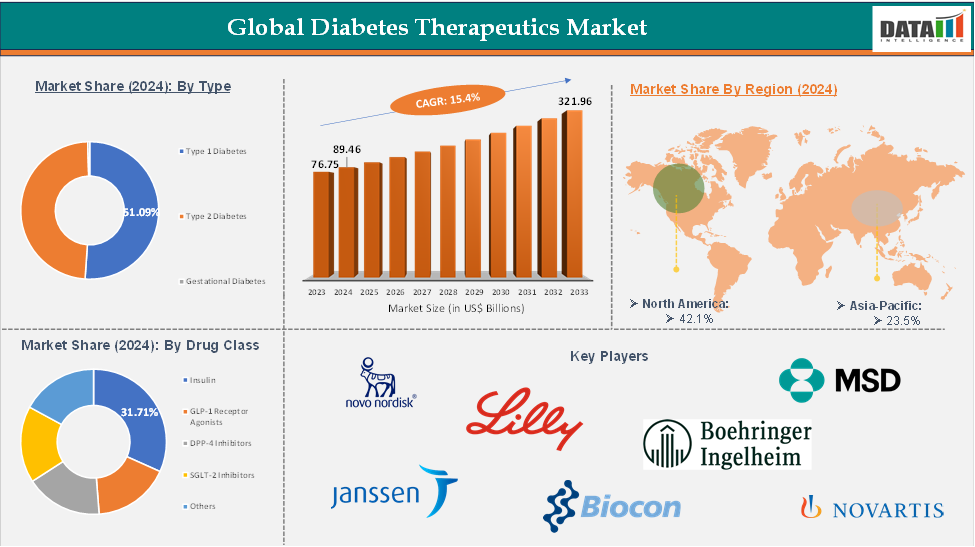
AUSTIN, TX, UNITED STATES, December 18, 2025 /EINPresswire.com/ -- According to DataM Intelligence, the global diabetes therapeutics market reached US$ 76.75 billion in 2023 and increased to US$ 89.46 billion in 2024, with forecasts indicating it will surge to US$ 321.96 billion by 2033, growing at a robust CAGR of 15.4% during the forecast period 2025–2033. Market expansion is being driven by the rising global prevalence of diabetes, aging populations, sedentary lifestyles, and increasing healthcare expenditure. As diabetes continues to impose a significant clinical and economic burden, demand is accelerating for therapies that are not only effective in glycemic control but also offer added benefits such as weight management and cardiovascular risk reduction.— DataM Intelligence
𝗚𝗲𝘁 𝗮 𝗦𝗮𝗺𝗽𝗹𝗲 𝗣𝗗𝗙 𝗕𝗿𝗼𝗰𝗵𝘂𝗿𝗲 𝗼𝗳 𝘁𝗵𝗲 𝗥𝗲𝗽𝗼𝗿𝘁 (𝗨𝘀𝗲 𝗖𝗼𝗿𝗽𝗼𝗿𝗮𝘁𝗲 𝗘𝗺𝗮𝗶𝗹 𝗜𝗗 𝗳𝗼𝗿 𝗮 𝗤𝘂𝗶𝗰𝗸 𝗥𝗲𝘀𝗽𝗼𝗻𝘀𝗲): https://www.datamintelligence.com/download-sample/diabetes-therapeutics-market
The market is undergoing a major therapeutic shift from traditional treatments toward innovative drug classes, including GLP-1 receptor agonists, SGLT-2 inhibitors, DPP-4 inhibitors, and next-generation dual and triple agonists. Leading pharmaceutical companies such as Novo Nordisk, Eli Lilly, Sanofi, Merck & Co., AstraZeneca, and Boehringer Ingelheim are strengthening their market positions through intensive R&D investments, novel product launches, biosimilar development, and strategic collaborations. At the same time, the integration of digital health technologies, personalized medicine approaches, and connected care solutions such as continuous glucose monitoring, smart insulin delivery devices, and AI-driven analytics is transforming diabetes management. With strong reimbursement frameworks and advanced healthcare infrastructure, North America remains the dominant region, while global adoption of innovative and patient-centric therapies continues to drive sustained market growth.
Key Highlights from the Report
➤ The global diabetes therapeutics market continues to grow steadily due to the rising prevalence of diabetes worldwide.
➤ Insulin and insulin analogs remain the cornerstone of diabetes treatment across patient populations.
➤ Type 2 diabetes accounts for the largest share of therapeutic demand globally.
➤ North America dominates the market due to strong healthcare infrastructure and early adoption of innovative drugs.
➤ GLP-1 receptor agonists and SGLT2 inhibitors are among the fastest-growing drug classes.
➤ Ongoing R&D and combination therapies are reshaping the future of diabetes management.
Market Segmentation
The diabetes therapeutics market segmentation highlights the diversity of treatment options, disease types, and end-user settings across the global healthcare ecosystem.
- By drug class, the market includes insulin, insulin analogs, biguanides, sulfonylureas, DPP-4 inhibitors, GLP-1 receptor agonists, SGLT2 inhibitors, thiazolidinediones, and combination therapies. Insulin and insulin analogs dominate the segment due to their indispensable role in managing type 1 diabetes and advanced type 2 diabetes. However, non-insulin therapies particularly GLP-1 receptor agonists and SGLT2 inhibitors are gaining strong traction because of their benefits in weight management, cardiovascular risk reduction, and renal protection.
- By diabetes type, the market is segmented into type 1 diabetes, type 2 diabetes, and gestational diabetes. Type 2 diabetes represents the largest share, accounting for the majority of diagnosed cases worldwide. The increasing prevalence of obesity and lifestyle-related risk factors has significantly expanded the patient pool requiring long-term therapeutic intervention. Type 1 diabetes, while smaller in patient numbers, continues to drive consistent demand for insulin-based therapies.
- By route of administration, diabetes therapeutics are categorized into oral, injectable, and inhaled therapies. Oral antidiabetic drugs remain the most widely prescribed due to patient convenience and cost-effectiveness, particularly in early-stage type 2 diabetes. Injectable therapies, including insulin and GLP-1 receptor agonists, are witnessing increasing adoption as treatment guidelines evolve toward earlier use of effective glycemic control strategies.
- By distribution channel, the market includes hospital pharmacies, retail pharmacies, and online pharmacies. Retail pharmacies account for a significant share due to the chronic nature of diabetes treatment and recurring medication needs. Online pharmacies are growing rapidly, driven by digital health adoption, improved access, and home delivery convenience.
Looking For A Detailed Full Report? Get it here: https://www.datamintelligence.com/buy-now-page?report=diabetes-therapeutics-market
Regional Insights
- North America dominates the global diabetes therapeutics market, supported by a high prevalence of diabetes, advanced healthcare systems, and strong pharmaceutical innovation. The United States represents the largest share within the region, driven by early diagnosis, widespread insurance coverage, and rapid adoption of next-generation therapies such as GLP-1 receptor agonists and combination drugs.
- Europe holds a substantial market share, driven by increasing diabetes awareness, government-supported healthcare systems, and strong emphasis on preventive care. Countries such as Germany, the UK, and France are leading markets due to robust reimbursement policies and growing adoption of novel antidiabetic drugs.
- The Asia-Pacific region is expected to witness the fastest growth during the forecast period. Rapid urbanization, changing dietary habits, and rising obesity rates have significantly increased diabetes prevalence in countries such as China, India, and Japan. Expanding healthcare access, improving diagnostic rates, and growing pharmaceutical manufacturing capabilities are further fueling market expansion in the region.
- Latin America, the Middle East, and Africa are emerging markets for diabetes therapeutics, supported by improving healthcare infrastructure and rising awareness of chronic disease management. While access challenges remain, increasing government initiatives and international collaborations are expected to drive gradual market growth.
Market Dynamics
1)Market Drivers
A major driver of the diabetes therapeutics market is the global rise in diabetes prevalence, particularly type 2 diabetes. Lifestyle changes, aging populations, and increasing obesity rates are contributing to a growing patient base requiring long-term treatment. Additionally, advancements in drug development, including long-acting insulin analogs and innovative non-insulin therapies, are improving treatment outcomes and patient adherence. Increasing awareness of diabetes-related complications has also led to earlier diagnosis and intervention, further boosting therapeutic demand.
2)Market Restraints
Despite strong growth prospects, the market faces challenges such as high treatment costs and limited access in low- and middle-income regions. Advanced therapies, including biologics and combination drugs, can be expensive, creating affordability concerns. Furthermore, side effects associated with certain antidiabetic drugs, along with issues related to patient compliance and long-term safety, may limit widespread adoption in some patient groups.
3)Market Opportunities
The diabetes therapeutics market offers significant opportunities through the development of personalized medicine, combination therapies, and digital health integration. Innovations in drug delivery systems, such as smart insulin pens and connected devices, are enhancing treatment adherence and outcomes. Emerging markets present untapped growth potential as healthcare access improves and diabetes awareness increases. Additionally, ongoing research into disease-modifying therapies and beta-cell regeneration holds promise for the future of diabetes care.
Get Customization in the report as per your requirements: https://www.datamintelligence.com/customize/diabetes-therapeutics-market
Reasons to Buy the Report
✔ Gain comprehensive insights into the global diabetes therapeutics market size and growth trends.
✔ Understand evolving treatment paradigms and emerging drug classes shaping diabetes care.
✔ Identify high-growth regions and investment opportunities across developed and emerging markets.
✔ Analyze competitive strategies and R&D focus of leading pharmaceutical companies.
✔ Support strategic decision-making with reliable forecasts and expert analysis from DataM Intelligence.
Frequently Asked Questions (FAQs)
◆ How big is the global diabetes therapeutics market today?
◆ Who are the key players in the global diabetes therapeutics market?
◆ What is the projected growth rate of the diabetes therapeutics market?
◆ What is the market forecast for diabetes therapeutics by 2033?
◆ Which region is estimated to dominate the diabetes therapeutics industry through the forecast period?
Company Insights
Key players operating in the diabetes therapeutics market include:
• Novo Nordisk A/S
• Eli Lilly and Company
• Sanofi
• AstraZeneca
• Merck & Co., Inc.
• Boehringer Ingelheim
• Johnson & Johnson
• Pfizer Inc.
Recent Developments
- In November 2025, Novo Nordisk expanded its diabetes portfolio with next-generation GLP-1 receptor agonist therapies, supported by increased R&D investments aimed at improving glycemic control and cardiovascular outcomes.
- In October 2025, Eli Lilly and Company advanced its dual-action diabetes treatment pipeline, strengthening its market position through innovative combination therapies and expanded manufacturing capabilities.
Conclusion
The diabetes therapeutics market remains a cornerstone of the global healthcare industry, driven by the rising burden of diabetes and continuous innovation in treatment approaches. As highlighted by DataM Intelligence, the market is poised for sustained growth through 2033, supported by advances in drug development, expanding access to care, and increasing focus on personalized and preventive medicine. With a strong pipeline of novel therapies and growing demand across emerging economies, diabetes therapeutics will continue to play a vital role in improving patient outcomes and shaping the future of chronic disease management worldwide.
Related Reports :
1) Diabetic Neuropathy Market
2)Insulin Resistance Market
Sai Kiran
DataM Intelligence 4market Research LLP
+1 877-441-4866
sai.k@datamintelligence.com
Visit us on social media:
LinkedIn
YouTube
X
Legal Disclaimer:
EIN Presswire provides this news content "as is" without warranty of any kind. We do not accept any responsibility or liability for the accuracy, content, images, videos, licenses, completeness, legality, or reliability of the information contained in this article. If you have any complaints or copyright issues related to this article, kindly contact the author above.
